
Tapolca: Malom-tó, Tavasbarlang and Architectural Heritage
Accommodation in Tapolca
Tapolca brings together distinctive waterside locations and a layered city history. The Tapolcai-tavasbarlang is known for its geological features, karst springs shape the waterscape at Malom-tó, and churches, the Romkert and the museum reveal different traces of the past. If you are looking for a holiday destination with nature and cultural discoveries, Tapolca offers several distinct perspectives—from the protection of a cave to buildings from different eras.
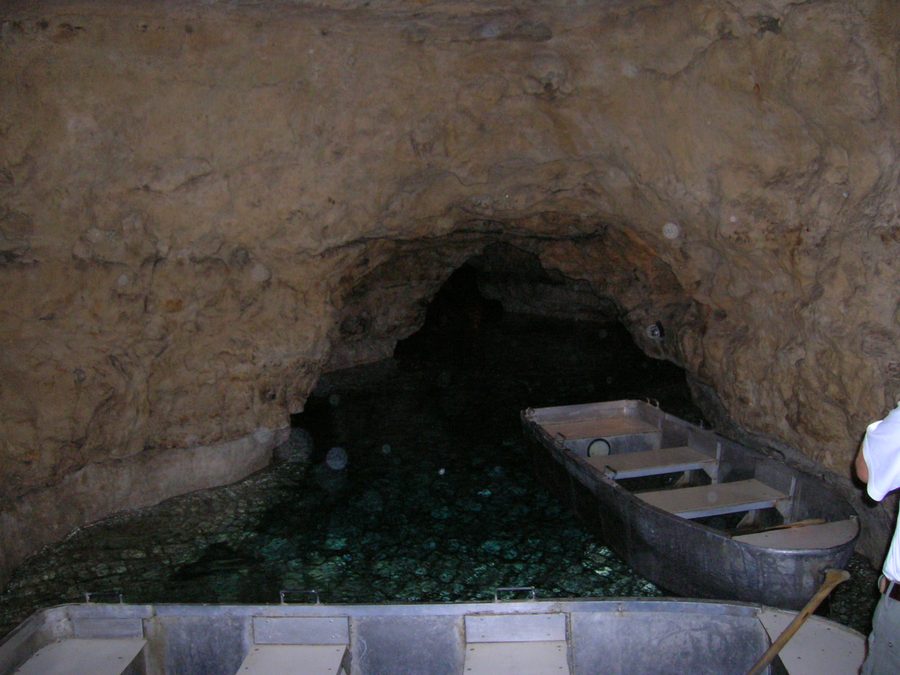 Boats on Tapolca's Cave Lake.
Photo: Alensha ( talk · contribs ) via Wikimedia Commons, Public domain
Karst and water at Malom-tó
The Tapolcai-tavasbarlang has been protected since 1942 and under strict protection since 1982. The reasons include its extent and its geological, morphological and hydrological value. This means that what makes it special is not just the cave as a single feature: its size and the various aspects of its natural character are also among the reasons for its protection. For nature enthusiasts, this is a distinctive side of Tapolca, different from the features of the lake.
Malom-tó is fed by several karst springs. Its water temperature remains constant at 18 °C, so the lake does not freeze over in winter. Old houses and a watermill stand around the lake. Spring water and a long-established built environment thus come together as distinct features of the same place. Those interested in Tapolca’s waterscape will find, alongside the protected cave, a lake whose constant temperature is a notable feature.
Churches, traces of a castle and city history
Tapolca’s Roman Catholic church stands on Templomdomb. Its notable architectural features include a Romanesque window and a Gothic choir with a rib vault. The Protestant church offers a different architectural accent: it was built between 1935 and 1936. The plans by Bálint Szeghalmy evoke the churches of Kalotaszeg with their wooden towers. The two churches therefore differ both in the features mentioned and in their respective architectural influences.
The tapolcai Romkert contains the partially reconstructed foundations of a castle of medieval origin. The wolf pit in front of the former gate is also visible there. These traces bring the former castle complex into view without conflating it with the church buildings. Those interested in different layers of the city’s history can consider these architectural remains alongside the churches’ distinctive features.
The Városi Múzeum presents permanent exhibitions on Tapolca’s history. The museum’s basement houses the Lapidarium, which displays stone monuments from Tapolca and its surroundings. The exhibitions thus complement the architectural remains with two further ways to explore the past: the city’s history and its stone monuments. Families wishing to explore a range of subjects during their stay can consider nature, architecture and local history as distinct areas of interest.
Recurring events throughout the year
Regular events include the Malomtó úszás New Year’s Eve swimming competition. The Pisztráng- és Borfesztivál is also held regularly in autumn. The two events bring different seasonal highlights: the competition takes place around New Year’s Eve, while the festival is an autumn event. If you are considering Tapolca as a holiday destination, these recurring events can be factored into your plans alongside its nature and cultural attractions.
More destinations
More destinations in the same selection: Káptalantóti, Ábrahámhegy, Köveskál, Revfülöp, Mindszentkálla, Szentbékkálla, Nemesvita, Lesencetomaj.
To the main travel overview: Tapolcai.

