
Vacation apartment in Pamukkale
Accommodation in Pamukkale
White terraces, mineral-rich thermal springs, and ancient history in one place: Pamukkale is one of those destinations that shapes a travel idea from the very first glance. The travertines and the city of Hierapolis, situated on the formation, combine landscape and cultural experience into a concentrated visit that can be planned both as a short stop and as an overnight base.
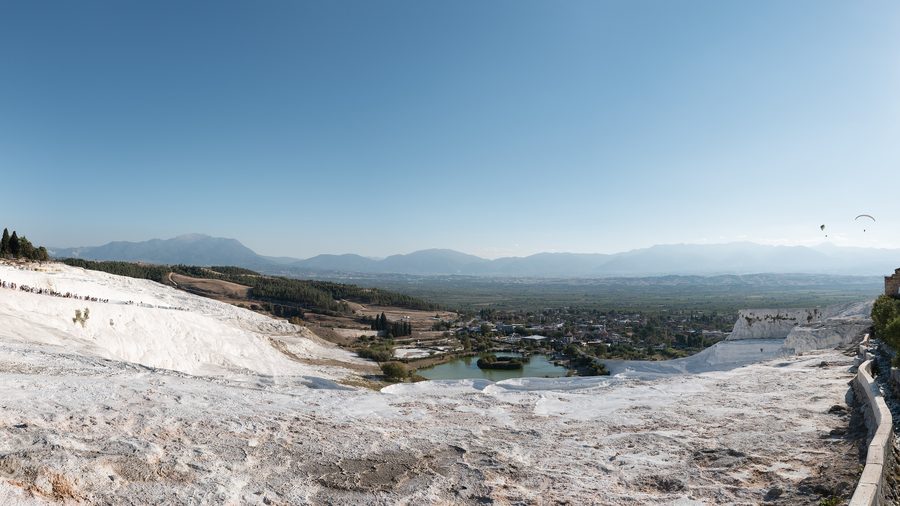 Pamukkale’s bright travertine terraces, formed by mineral-rich thermal water.
Photo: Giorgio Galeotti via Wikimedia Commons, CC BY-SA 4.0
Pamukkale’s bright travertine terraces, formed by mineral-rich thermal water.
Photo: Giorgio Galeotti via Wikimedia Commons, CC BY-SA 4.0
Quick facts about Pamukkale
- Landscape: Pamukkale’s light-colored carbonate travertines were formed by thermal spring water.
- Culture: The ancient city of Hierapolis stands on the travertine formation.
- Protection status: Hierapolis-Pamukkale has been a UNESCO World Heritage Site since 1988.
- Orientation: Pamukkale is located in the Turkish province of Denizli in southwestern Turkey.
Travertines and thermal spring as a shared experience
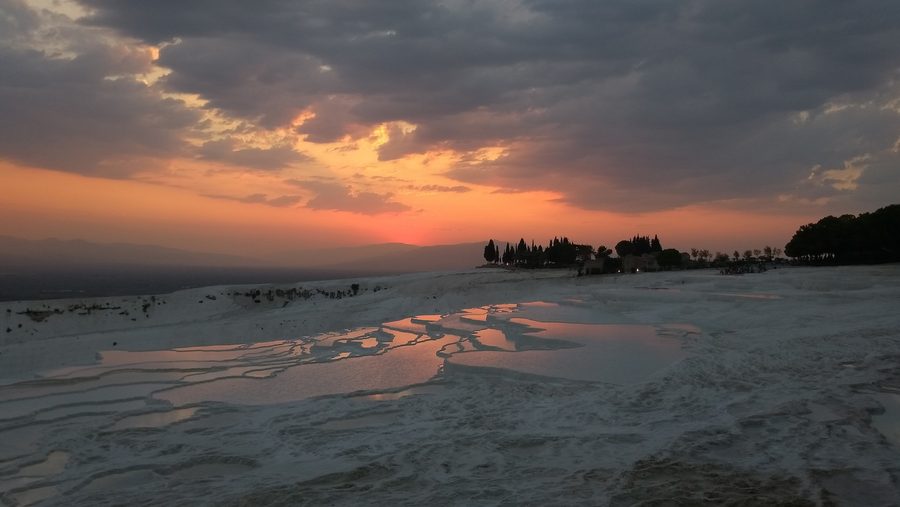
Pamukkale’s characteristic image is created by mineral-rich water that formed the white terraces and pools on the slope. It is precisely this combination of geological form and radiant surface that makes the place an experience that cannot be compared with an ordinary sightseeing visit. You should not generally assume that the pools are accessible or suitable for bathing: for current rules and the areas that can be used at any given time, it is wise to check before visiting.
The combination of landscape and history offers a clear focus for planning the day. You can make the travertines your main motif and then discover the historical dimension of the same place instead of moving between completely separate excursion destinations.
Hierapolis: ancient history on the travertine formation
Hierapolis lies on the travertine formation, so nature and archaeology are immediately part of the same visit. The thermal springs have attracted visitors since classical antiquity. This gives the place a special temporal depth: the white slopes are not just a backdrop for ruins, and the ancient city is not detached from its landscape.
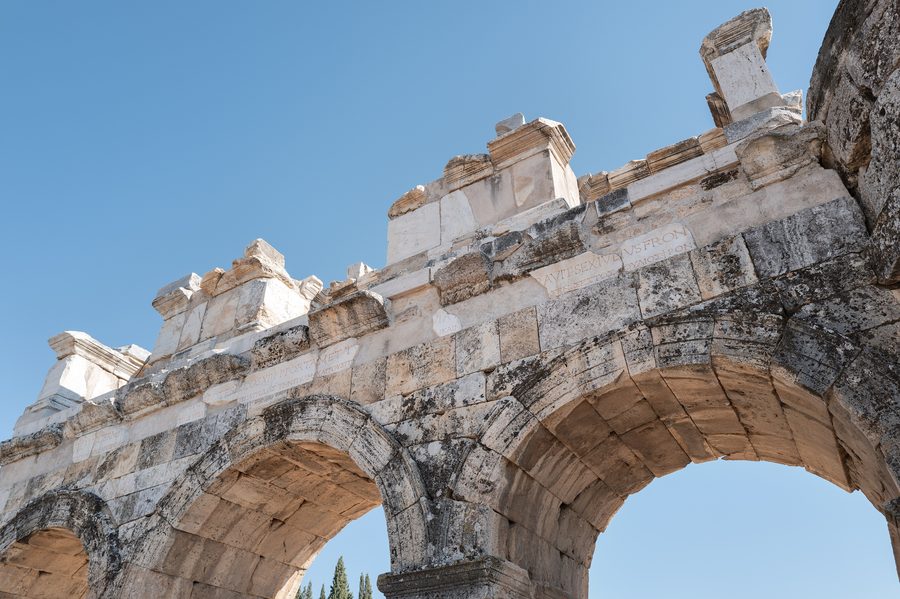
The UNESCO designation since 1988 underlines the combined character of the World Heritage Site. For your travel planning, the key question is therefore whether you want to see Pamukkale as a pure landscape backdrop or allocate time to the connection between the travertines and Hierapolis.
Short stop or overnight stay in Pamukkale?
Pamukkale can serve as a focused stop on a larger Denizli or Aegean route. A shorter travel plan concentrates on the central site. An overnight stay in or near Pamukkale, by contrast, gives the visit more room to combine travertines and Hierapolis in a less compressed rhythm. No fixed ideal length of stay can be derived from this; what matters is your other route and the pace of your planning.
A clear day plan can make the arrangements easier: decide whether the landscape or the ancient history should take center stage, and let the second perspective follow as a complementary part of the same visit. No conclusions can be drawn from this about accessibility, facilities, or specific paths.
Accommodation base: Pamukkale or Denizli?
For a stay focused on the travertines and Hierapolis, accommodation in or near Pamukkale is the obvious local choice. The town then remains the central reference point of your travel planning. Denizli, on the other hand, offers the orientation of a larger city and thus a broader regional starting point.
This distinction is not a general ranking. Choose a base near Pamukkale if you want to prioritize a visit to the central natural and cultural site. Denizli works as a larger regional reference point if Pamukkale is to be included in a broader route through the Aegean region and the Denizli area. If you travel via Denizli, check the current connections and conditions before departure; you should not accept specific travel times or service intervals without verification.
Excursion options in the wider Denizli area
If you do not want to stay exclusively in Pamukkale, you can consider Laodicea on the Lycus as another ancient site in the wider Denizli area. The site is not in Pamukkale and should therefore be understood as a regional addition, not as part of the travertine site. Exact distances, travel times, and transport connections should be checked in advance and kept up to date for this planning.
Frequently asked questions about Pamukkale
Why is Pamukkale more than just a landscape stop?
The white travertines formed by thermal water and the ancient city of Hierapolis lie within the same special site. In addition, the thermal springs have attracted visitors since classical antiquity.
Is Pamukkale suitable for a short stop or an overnight stay?
Both are possible: Pamukkale can be planned as a focused stop or as part of a larger Denizli and Aegean route. An overnight stay is above all a matter of itinerary and desired pace, not a general requirement.
Should you stay near Pamukkale or in Denizli?
Accommodation in or near Pamukkale keeps the central natural and cultural site in focus. Denizli is the broader urban reference point. Which base is right depends on whether the on-site visit or a larger regional route is more important.


