
Discover Tsukumi: Coast and Festival Traditions
Accommodation in Tsukumi
Tsukumi can be explored through two specific themes: the festival traditions at Red Hachiman Shrine in Tsukumiura and the coastline of the Chinu area. Each offers a different perspective on the town—one through history and customs, the other through its location on the Bungo Channel. If you’re looking for a vacation rental in Tsukumi, these interests can help you decide what you’d like to focus on during your trip.
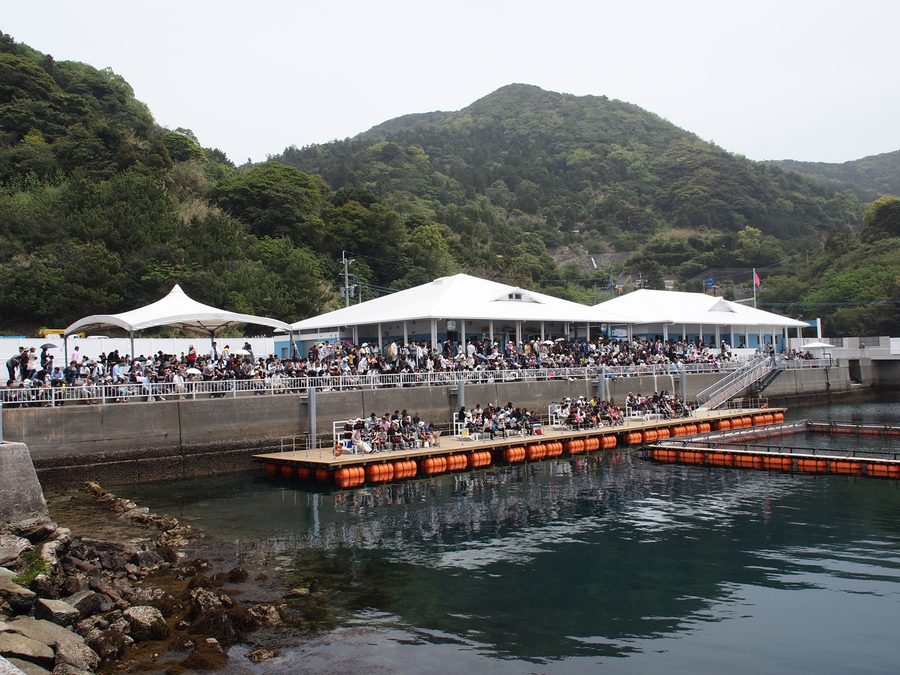 Tsukumi Dolphin Island bietet eine interaktive Delfinbegegnung in naturnaher Umgebung.
Photo: 大分帰省中 via Wikimedia Commons, CC BY-SA 3.0
Red Hachiman Shrine and the Autumn Festival
Red Hachiman Shrine in Tsukumiura enshrines Emperor Ōjin, Emperor Chūai, and Empress Jingū; Akahachiman-sha is also a name commonly used for the shrine. On February 3, 2025, the shrine’s autumn festival was designated an intangible folk cultural property of Tsukumi City. The shrine is located at 465, Aza Miyanomae, Ōaza Tsukumiura. For visitors interested in local traditions, this brings together a specific connection to the place and the city’s cultural property designation. For those interested in culture, the shrine connects religious worship with the autumn festival tradition.
Traditionally, the autumn festival was celebrated over five days, from the 9th to the 13th day of the ninth month in the old calendar. In the modern calendar, this period falls in October; the festival was also known as the “Kugatsu-kunchi Festival.” The old-calendar dates show the five-day sequence, while the month reference makes it easier to place the festival in the modern calendar. For those interested in local customs, this offers more than a month: both the traditional duration and the days of the month remain clear.
An entry dated September 5, 1723, in the official diary of the Saiki domain mentions the upcoming Red Hachiman festival in the Tsukumiura group. Frequent mentions in later entries suggest that the festival may have been well known in the Saiki domain area. For those interested in history, the festival’s story therefore reaches back to a mention of the upcoming event in 1723.
The Chinu Coast and Tsukumi’s Location
The coastline of the Chinu area lies within and offshore from Ōaza Tsukumiura. It is part of the coast of Tsukumi Port on the western shore of the Bungo Channel. This clearly defined coastal setting adds a second perspective on Tsukumiura alongside the festival history of Red Hachiman Shrine. If you compare destinations by character, local history and maritime geography offer two distinct interests here.
A Taiko Program as Another Cultural Connection
A program offered beginners an accessible introduction to taiko drumming as an accompaniment to the Tsukumi Sensu Dance. The meeting point was Tsukumi City Hall, at 3825-100, Ōaza Tsukumiura. Compared with the autumn festival, it raises two different questions: the festival history shows when celebrations traditionally took place, while the program shows how taiko was taught in connection with a named dance.
Discover More Destinations
Kusu District, Beppu, Kunisaki, Bungo-Takada, Saiki, Hita, Taketa, Nakatsu
For the main travel overview: Ōita Prefecture.

