
Accommodation in Morocco
Accommodation in Morocco
Morocco invites you to combine very different travel experiences: walks through lively medinas, coastlines on the Atlantic and Mediterranean, mountain landscapes, and southern oasis and desert-fringe regions. Added to this is a food culture that, with tajine, couscous, pastilla, and mint tea, also offers many shared discoveries in everyday family life. So first consider which kind of trip suits your family best — and then choose the region and the location of your accommodation.
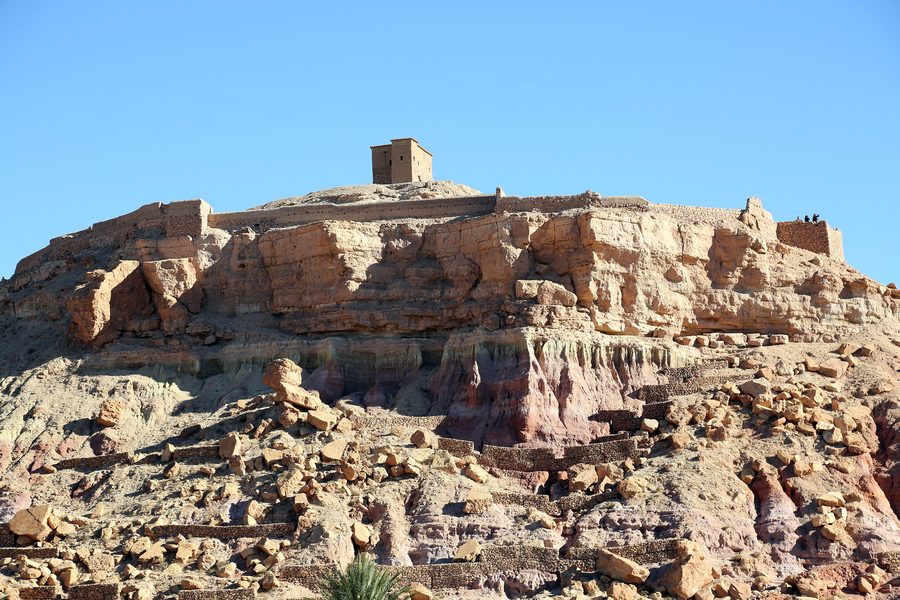 Der Ksar von Aït Ben Haddou steht exemplarisch für das kulturelle Erbe und die trockeneren Landschaftsräume im Süden Marokkos.
Photo: flowcomm via Wikimedia Commons, CC BY 2.0
Der Ksar von Aït Ben Haddou steht exemplarisch für das kulturelle Erbe und die trockeneren Landschaftsräume im Süden Marokkos.
Photo: flowcomm via Wikimedia Commons, CC BY 2.0
Short & sweet
- In Moroccan medinas, everyday life and cultural traditions come to life when explored on foot.
- Morocco combines Atlantic and Mediterranean coastlines with much more varied inland landscapes.
- The Rif, Middle Atlas, High Atlas, and Anti-Atlas open up a nature experience beyond the coast.
- South of the Anti-Atlas, the landscape gives way to drier desert areas with oases.
- Tajine, couscous, and pastilla are among the best-known dishes of Moroccan cuisine.
- Mint tea stands for hospitality in Moroccan food culture; shared meals and bread also play an important role.
Between medina, coast, and desert edge
A medina is more than a collection of individual sights. Narrow streets, markets, and everyday encounters make cultural traditions tangible on a shared walk. For families, a city-based stay can therefore be especially varied: while children discover new sounds, colours, and smells, history can be observed directly in the streetscape. Do not plan a medina only as a short stopover if cultural exchange is an important part of your trip.
The following photo shows the ksar of Aït-Ben-Haddou and adds to the view of Morocco’s historical and scenic impressions.
If you look beyond the cities, you will find a different Morocco on the Atlantic and Mediterranean coasts as well as in the Rif, the Middle Atlas, the High Atlas, and the Anti-Atlas. South of the Anti-Atlas, the landscape changes again: dry desert regions and oases form a distinct part of the journey. These contrasts are a good basis for combining active days, cultural walks, and quieter stays without forcing them into one overloaded itinerary.
Which kind of trip suits you?
For a city and culture trip, a stay with a deliberate urban focus is a good choice. That way, walks through a medina and observing everyday life remain central instead of simply travelling from one landscape region to another. A coast-oriented trip, by contrast, sets a different emphasis: if the coast is meant to shape the stay, look for accommodation specifically in a coastal area rather than inland.
Mountains and southern desert-fringe landscapes point to a trip with a stronger focus on nature and scenery. If several of these very different areas are to be combined with cities and coast, travelling in stages is a sensible alternative to using just one base. How many changes are comfortable for your family depends mainly on the desired daily rhythm and the children’s energy levels. One fixed base can provide calm and clarity; several locations, on the other hand, make different landscapes part of the journey in a very direct way.
Food culture as a shared travel experience
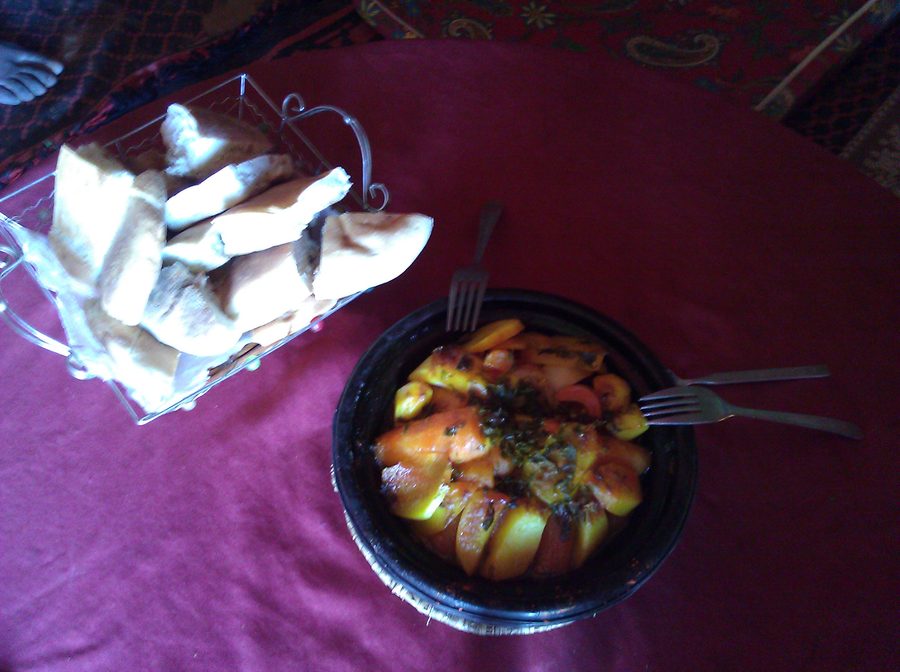
Moroccan cuisine can be discovered in various ways: tajine, couscous, and pastilla offer a concrete introduction, while spices such as ras el hanout stand for characteristic aromas. Mint tea, as a sign of hospitality, also belongs to the culinary picture. Shared meals and bread as an important part of food culture make eating a social experience that can be easily combined with market visits and conversations about regional produce.
If you like shopping at markets and organising meals yourself, accommodation with suitable self-catering flexibility may be relevant for your daily routine. The exact amenities vary by property, so check before booking whether the option you want is actually available. If, on the other hand, you want to try local food away from your accommodation as often as possible, you can link meal planning more closely to city or coastal stays.
Choose the accommodation location based on your trip idea
A city location is, from a geographical point of view, a better fit for a medina- and culture-focused stay than a remote location. For a stay at the coast, you should narrow your search to the respective coastal area. If you combine cities, mountains, and southern desert-fringe landscapes, dividing the trip into several stages may be more sensible than searching for just one starting point across the whole country.
Whether a holiday apartment, riad, apartment, or hotel suits you best depends on your preferred daily routine. Important factors can include privacy, flexible meals, and whether the accommodation is mainly meant to be a city base, a quiet retreat, or part of a trip with several stops. Also take children of different ages and the wish for weather-flexible days into account when choosing your location.
Discover regions in Morocco
After getting oriented at the national level, you can continue exploring the subordinate regional destinations at your leisure: Chaouia-Ouardigha, Doukkala-Abda, Fès-Boulemane, Gharb-Chrarda-Beni Hssen, Grand Casablanca, Guelmim-Es Semara, Laayoune-Boujdour-Sakia El Hamra, Marrakech, Meknès-Tafilalet, Oriental, Rabat-Sale-Zemmour-Zaer, Souss-Massa-Draa, Tadla-Azilal, Tanger-Tétouan, and Taza-Al Hoceima-Taounate.

.jpg)
_(6).jpg)